Candles can be decorative, functional, fragrant, sculptural, or all of those at once. But the two main categories most candle makers work with are molded candles and container candles.
Quick answer: Molded candles are poured into a mold, removed after setting, and chosen mostly for shape, detail, and visual impact. Container candles are poured into a jar or vessel and are usually better for fragrance, long burn time, and everyday use. If you want to make decorative shaped candles, start with well-designed silicone candle molds. If your main goal is room fragrance, container candles are usually the better choice.
What Are Molded Candles?
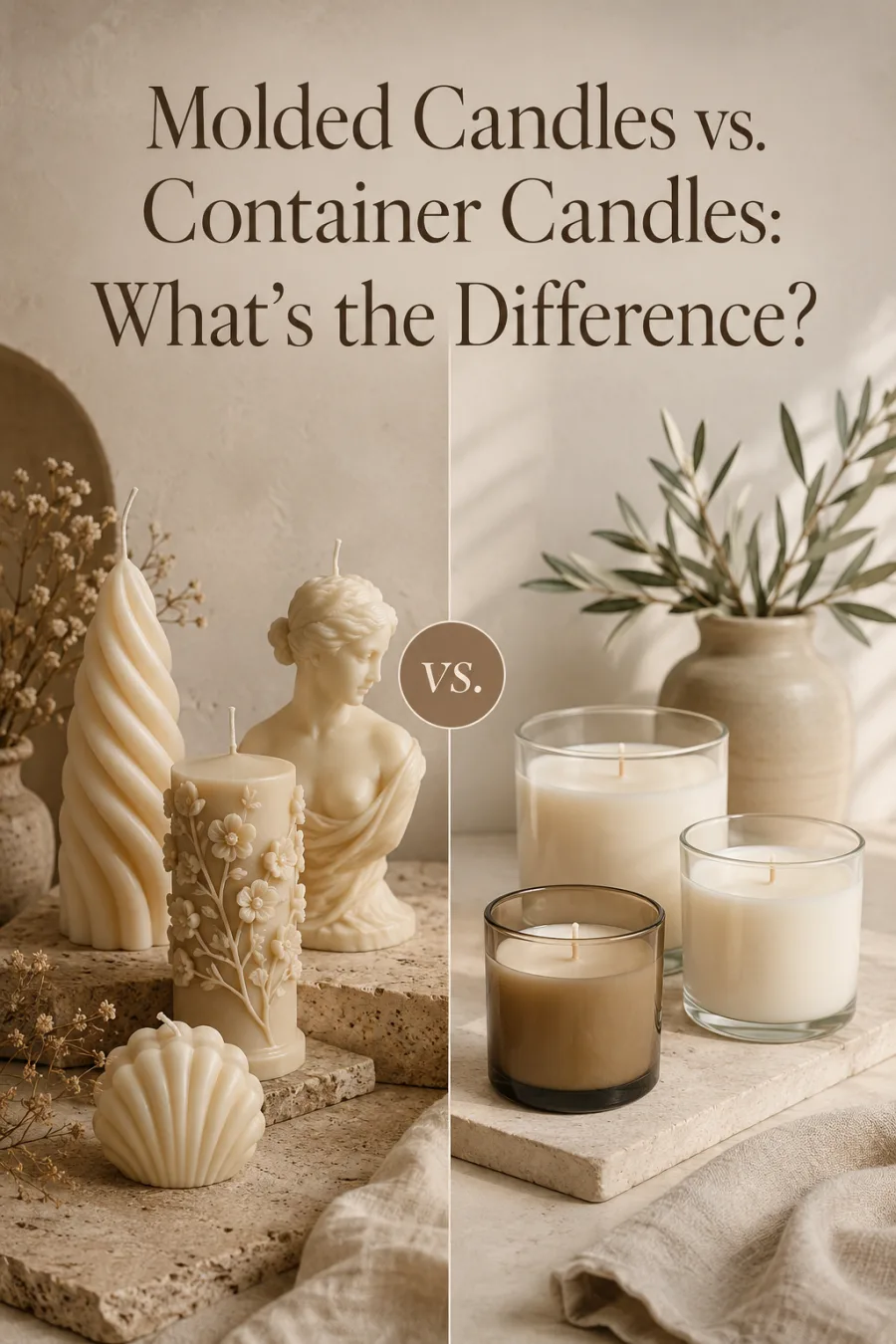
Molded candles are made inside a mold. After the wax sets, the candle is removed and burned as a free-standing piece.
This category includes pillar candles, taper candles, floral candles, sculptural candles, novelty candles, holiday candles, and decorative statement candles.
The biggest advantage of molded candles is visual design. You can create shapes, textures, raised details, floral patterns, vintage-inspired designs, and seasonal collections that would not be possible in a simple jar.
For example, silicone taper candle molds are ideal for long decorative candles used in tablescapes, gift sets, wedding decor, and styled product photography. A mold like the Wildflower Taper Candle Mold creates two detailed taper candles per pour, which makes it useful for small-batch candle makers who want products that look more special than plain tapers.
Molded candles are often used for:
- home decor
- seasonal collections
- gift boxes
- wedding tables
- boutique product lines
- styled photos and social media content
- candles that are bought for beauty first
Molded candles can be scented, but they are not usually the strongest choice for filling a room with fragrance. Their main job is to make an impression.
What Are Container Candles?
Container candles are poured directly into a vessel and stay inside that vessel while burning.
The container can be a glass jar, metal tin, ceramic cup, concrete vessel, plaster pot, coconut shell, or another heat-safe container.
Container candles are usually chosen for fragrance, long burn time, and simple everyday use. Since the melted wax stays inside the container, the candle burns in a more controlled way and releases fragrance gradually.
Container candles are often used for:
- room fragrance
- spa-style candles
- self-care products
- seasonal scent collections
- gift candles
- everyday home fragrance
If your customer wants a candle mainly for scent, a container candle usually makes more sense.
Wax Differences
Molded candles and container candles usually need different wax types.
Molded candles need wax that can hold its shape after the candle is removed from the mold. That usually means a harder wax or a wax blend with a higher melting point, often around 135–145°F / 57–63°C.
This helps the candle stay stable, keep clean edges, and hold decorative detail.
For detailed floral or sculptural molded candles, the mold also matters. A good silicone mold should release cleanly without tearing details or stretching the candle. That is why split silicone molds are useful for decorative candles. They open fully, so the candle can come out cleanly and the mold can be washed properly between colors.
For larger statement candles, silicone pillar candle molds are a better fit. The Peony Pillar Candle Mold, for example, is designed for a large botanical pillar candle with raised floral detail.
Container candles can use softer wax because the vessel supports the candle. Many container waxes have a lower melting point, often around 111–117°F / 44–47°C, depending on the blend.
Important: melting point is not the same as pouring temperature. A wax can have a low melting point but still need a specific pouring temperature based on wax type, fragrance oil, container, room temperature, and testing results.
Wick Differences
Molded candles usually use cotton wicks selected for the candle shape, diameter, and wax blend. The wick needs to burn evenly without melting the candle too fast or destroying the shape.
Container candles may use cotton wicks, wooden wicks, or wicks with metal sustainers. The wick must match the container diameter, wax type, fragrance load, and desired burn style.
A wrong wick can cause tunneling, overheating, smoking, weak scent throw, or poor burn performance.
Fragrance Differences
Container candles are usually better for fragrance throw. The wax pool stays inside the vessel, which helps the fragrance release gradually while the candle burns.
Molded candles can be scented, but they are usually purchased for appearance first. Their strength is shape, surface detail, and presentation.
This is especially true for floral and decorative candles. A customer may buy a taper candle because it looks beautiful in a candle holder, matches a tablescape, or feels special as a gift. In that case, the design is the main selling point.
For floral molded candles, explore silicone flower candle molds or product designs like the Lily Taper Candle Mold and Peony Taper Candle Mold.
Which Candle Type Should You Make?
Choose molded candles if you want to create candles with shape, detail, texture, and visual identity.
They are a strong choice for candle makers who sell on Etsy, Shopify, at markets, in boutiques, or through seasonal collections. Molded candles photograph well, stand out online, and can help your product line feel more original.
Choose container candles if your main goal is fragrance, long burn time, and everyday use.
Many candle brands sell both. Container candles can carry your fragrance collection, while molded candles can create visual interest, gift appeal, and seasonal product drops.
A smart product line might include:
- container candles for scent
- molded taper candles for decor
- molded pillar candles for statement pieces
- floral candles for gifts
- wax melts for affordable fragrance products
If you are building a molded candle line, start with the main silicone candle molds collection, then choose a more specific mold type based on your product style.
Related Muse Molds Products
For decorative taper candles, start with the Wildflower Taper Candle Mold.
For large botanical candles, use the Peony Pillar Candle Mold.
For floral taper candles, see the Lily Taper Candle Mold or Peony Taper Candle Mold.
Use the candle wax calculator to estimate wax amounts before testing a new mold.
New to candle making? Start with our free candle making course.
FAQ
Are molded candles only decorative?
Molded candles are mostly chosen for design, shape, and visual impact. They can be burned and scented, but they are usually not the best choice if the main goal is strong room fragrance.
Are container candles better for scent throw?
Yes. Container candles are usually better for fragrance throw because the melted wax stays inside the vessel and releases scent gradually while burning.
Can I use the same wax for molded and container candles?
Usually no. Molded candles need wax that holds its shape outside a container. Container candles can use softer wax because the vessel supports the candle.
What candle type is better for selling online?
Molded candles are often stronger visually because they photograph well and stand out in product feeds. Container candles are better when the main selling point is fragrance.
Can molded candles be scented?
Yes. Molded candles can be scented, but scent is usually not their main advantage. Their strongest selling point is shape, detail, and design.