
October 11, 2026
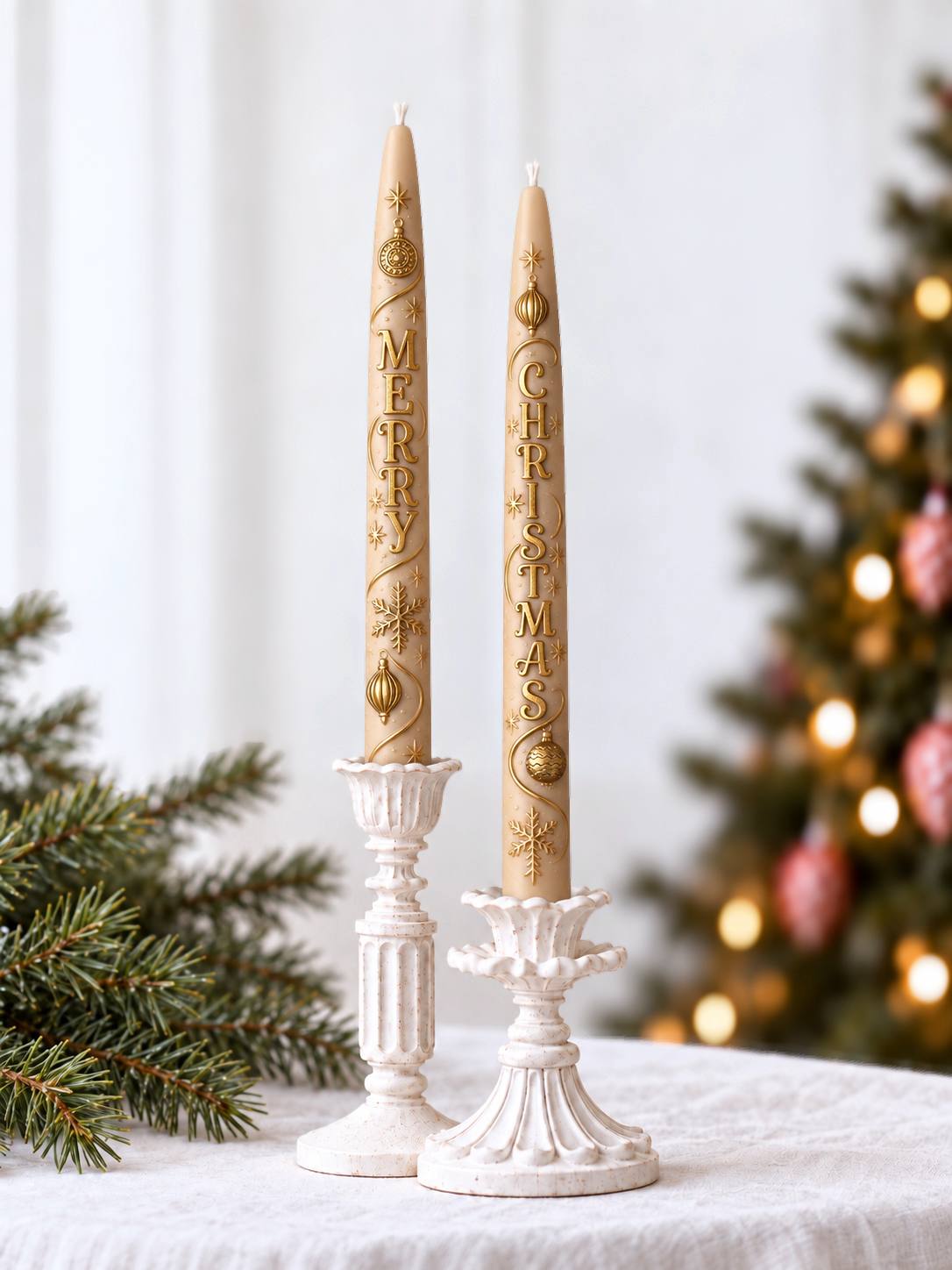
Merry Christmas Candle Mold: A Timeless Holiday Design
A closer look at our Merry Christmas silicone taper candle mold, its classic lettering, decorative relief, two-candle format and practical studio tips.
Read post
Candle making guides, silicone mold tips, wax melt resources, and behind-the-scenes notes from Muse Molds. Learn how to choose candle molds, work with silicone molds, calculate wax, pour cleaner candles, and build better handmade candle collections.
If you are new to silicone candle molds or building a small candle business, start with our beginner guide, wax calculator, and main mold collections.
A closer look at our Merry Christmas silicone taper candle mold, its classic lettering, decorative relief, two-candle format and practical studio tips.
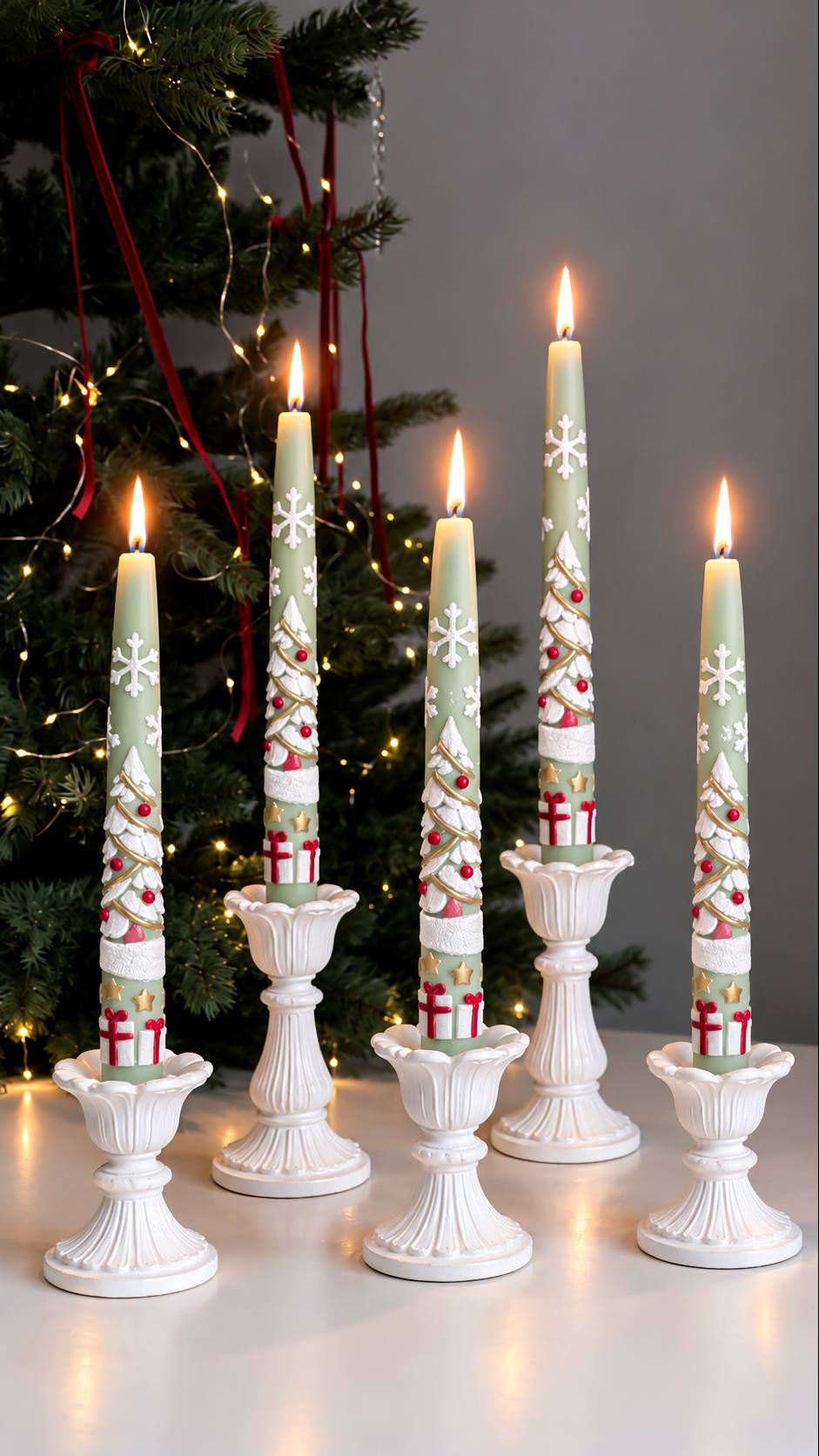
A closer look at our Christmas silicone candle molds: decorative tapers, a sculptural cat and a 2D Christmas door, plus two practical tips from our free candle making course.
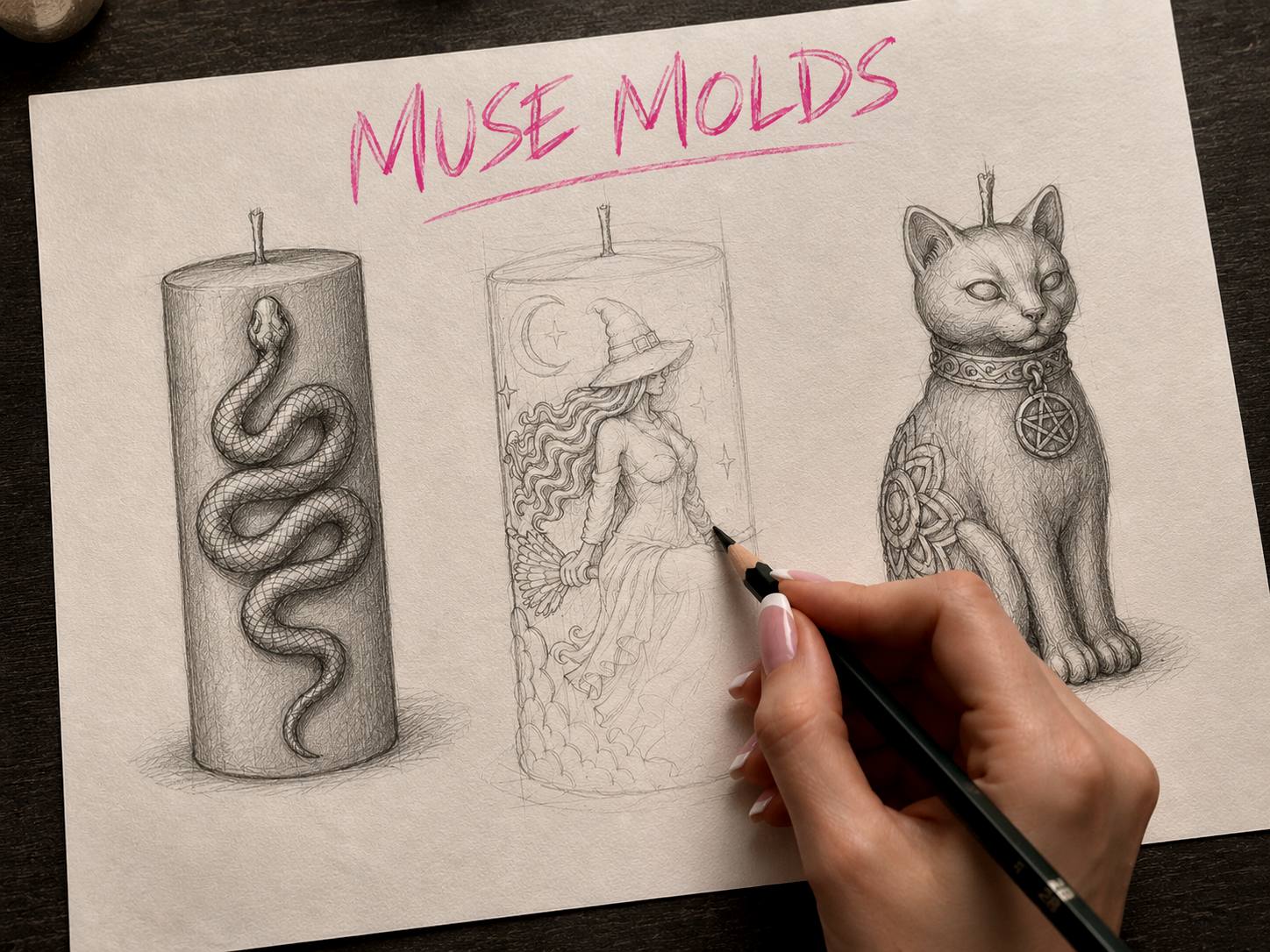
How a custom silicone candle mold is made in our small Charlotte, North Carolina studio — from sketch to 3D model, master printing, silicone casting and test pours, with real pricing and timelines.
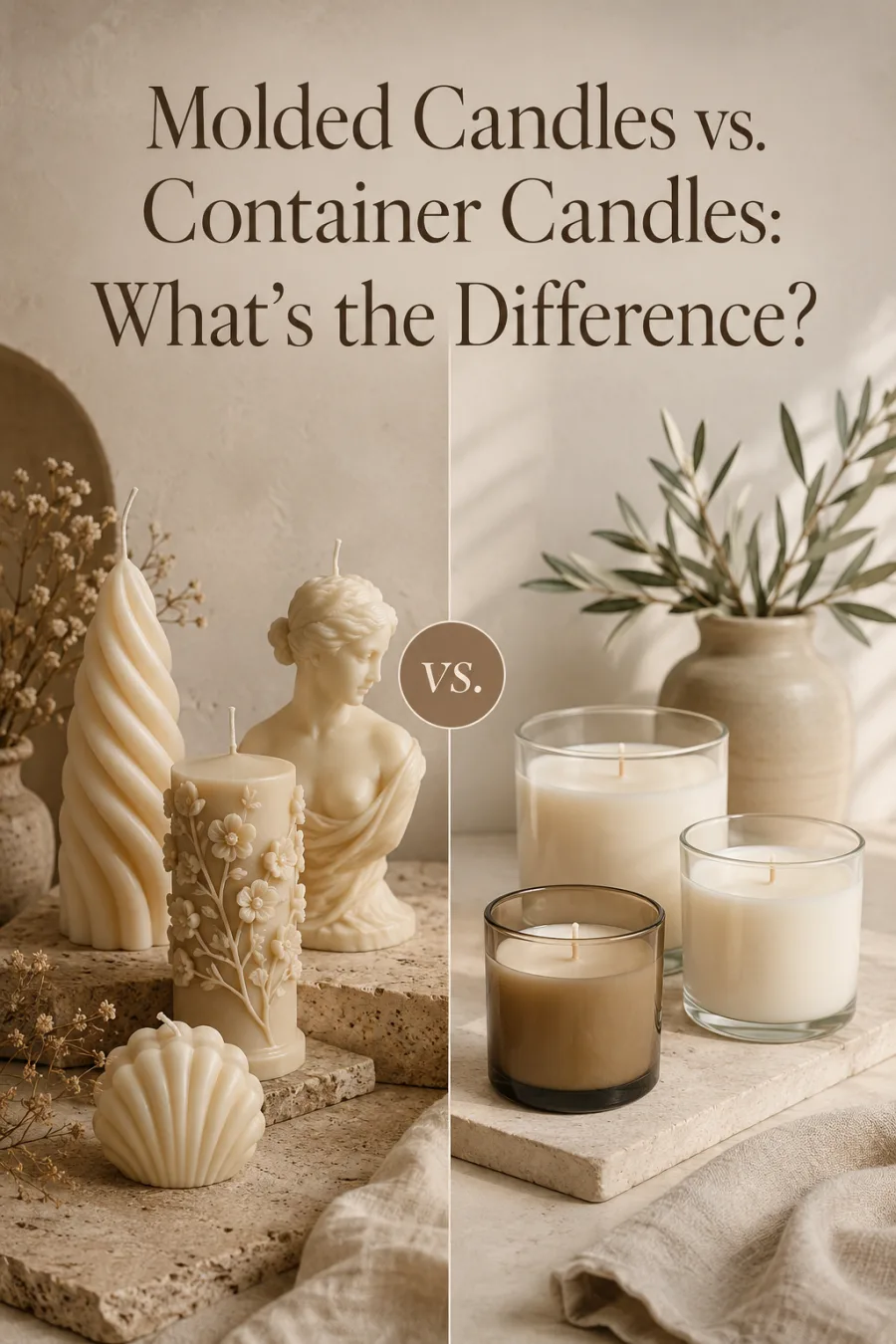
Learn the difference between molded and container candles, including wax, fragrance, wick choice, burning style, and when to use each type.
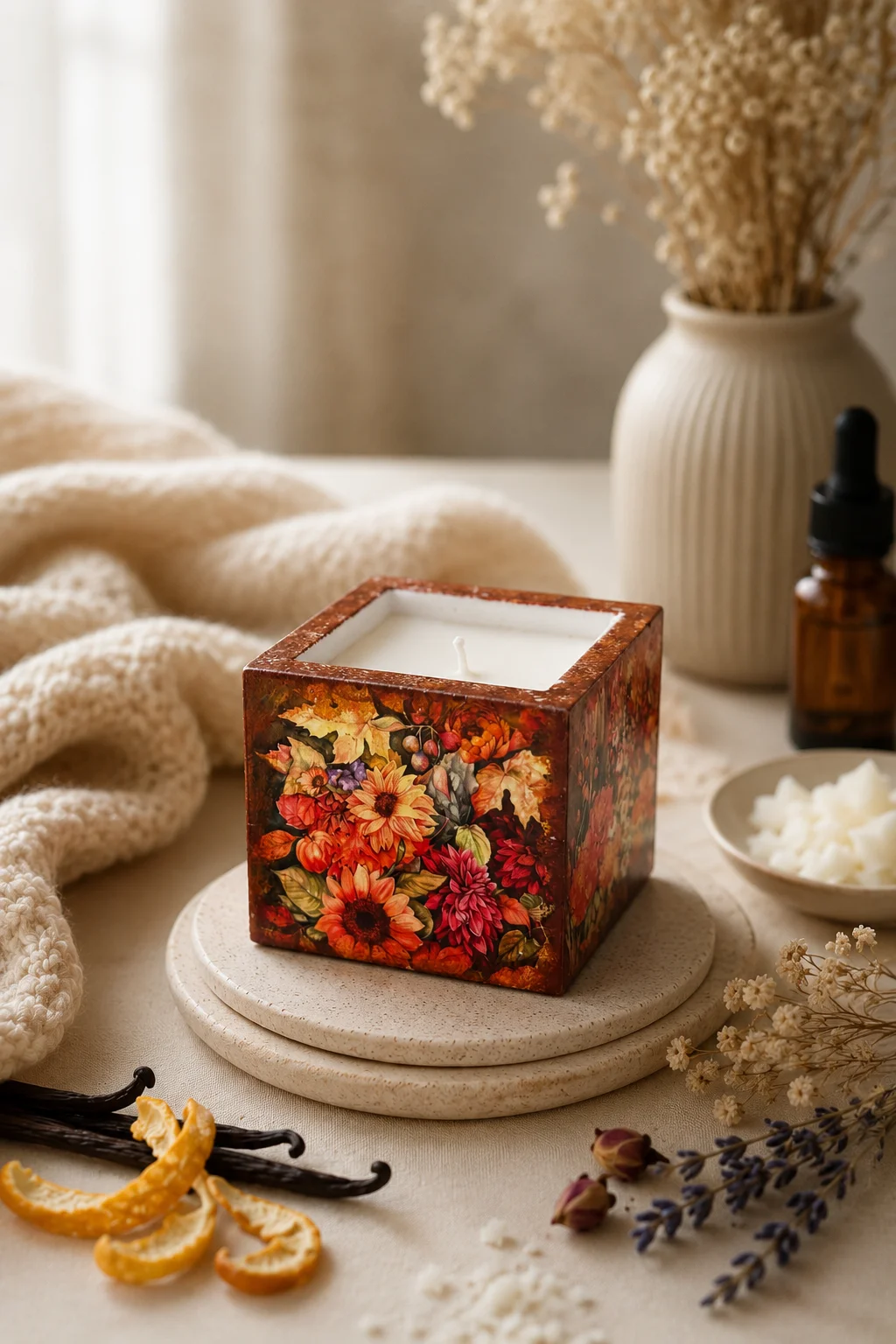
Weak scent throw can be caused by short curing time, the wrong wick size, a candle that is too small for the room, poor fragrance mixing, drafty testing conditions, or the unique behavior of a specific fragrance oil.

Thin surface cracks in container candles are usually caused by wax shrinkage, trapped air bubbles, or uneven cooling — not by poor-quality wax, fragrance oil, or colorants.
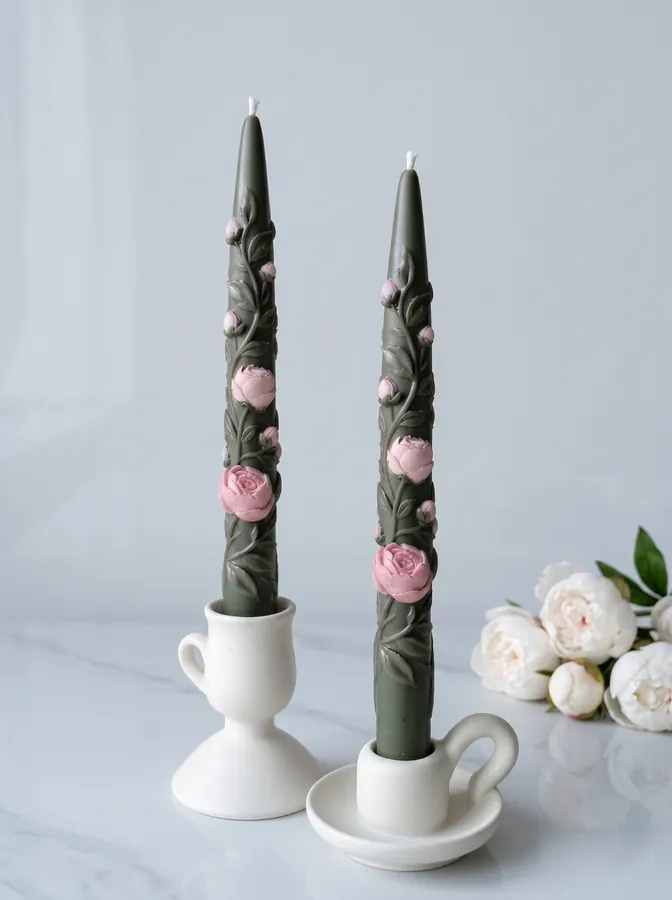
When you make candles, the final result depends on more than the mold. Wax temperature, room temperature, fragrance mixing, and cooling time all affect how clean, smooth, and professional your candle looks.
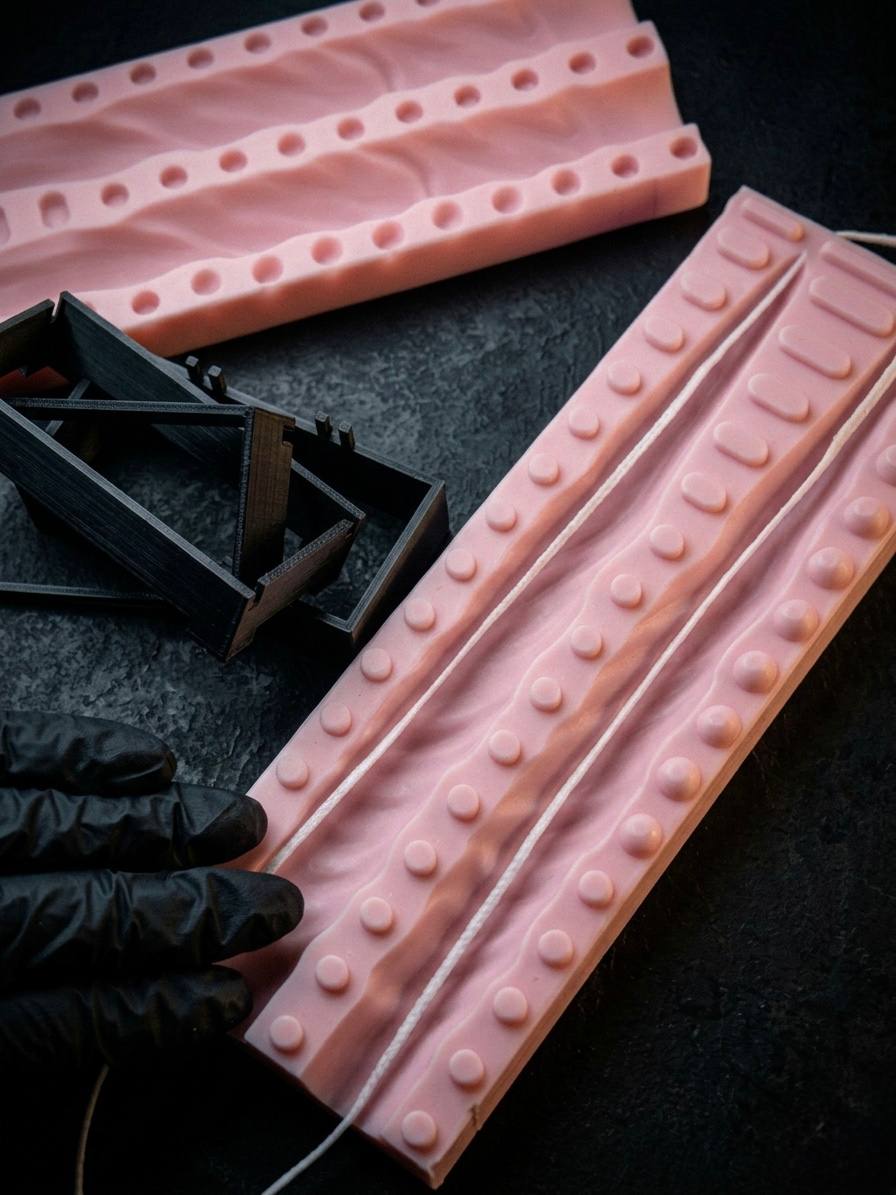
Cheap silicone molds are the #1 reason beginners get frustrated with candle making. Here's what to look for — and what to avoid — when choosing your first candle mold.
The Muse Molds Journal covers candle making molds, silicone candle molds, taper candle molds, pillar candle molds, wax melt molds, flower candle molds, wax calculation, demolding, cleanup, seasonal candle collections, and custom silicone mold development.