

This simple guide walks through the basic wax-pouring process and the small details that help prevent common problems like uneven tops, air bubbles, poor detail, weak scent throw, and surface imperfections.
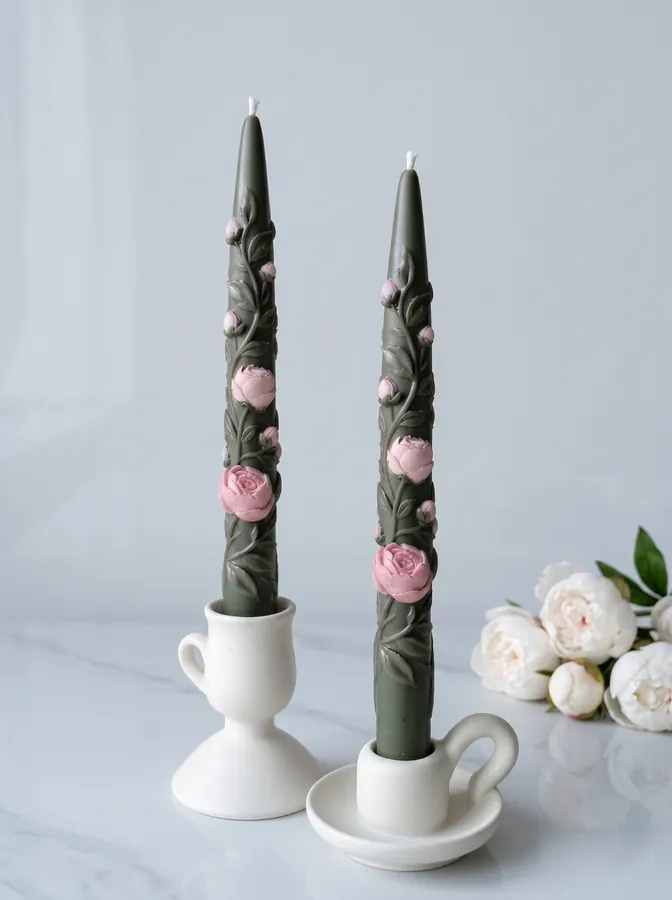
Quick answer: For cleaner candle results, melt your wax gently, monitor the temperature with a thermometer, add fragrance at the temperature recommended by your wax or fragrance supplier, and pour at the right temperature for your candle type. Container candles and silicone mold candles are not poured the same way. Low pouring temperatures may work for jars, but silicone candle molds usually need hot wax and a warmed mold to capture clean detail.
1. Prepare the Wax
Start by measuring the amount of wax you need for your candle or mold. Place the wax into a heat-safe melting container.
For best results, do not guess the wax amount. If you are working with a new candle mold, weigh your test pour and keep notes so you can repeat the same formula later.
If you are not sure how much wax your mold needs, use the candle wax calculator before pouring.
2. Melt the Wax Gently
Melt the wax slowly using a double boiler or wax melter. Avoid direct high heat, because overheated wax can affect fragrance performance, texture, adhesion, and the final surface of the candle.
Fully melted wax often becomes clear or more transparent, depending on the wax type. Stir slowly and avoid whipping air into the wax.
3. Watch the Temperature
Temperature control is one of the most important parts of candle making. Always use a thermometer or temperature probe.
If wax gets too hot, it may not hold fragrance as well. If it is poured at the wrong temperature, it can also create surface issues, poor mold detail, sinkholes, frosting, air pockets, or adhesion problems.
Every wax is different, so always follow the manufacturer's recommended temperatures for melting, fragrance addition, and pouring.
4. Add Fragrance Oil Carefully
Add fragrance oil at the temperature recommended by your wax or fragrance supplier. After adding fragrance, stir slowly but thoroughly.
The goal is to fully blend the fragrance into the wax without creating air bubbles. Poor mixing can cause fragrance separation, weak scent throw, oily spots, or uneven performance.
A good habit is to stir for 1–2 minutes with slow, consistent movement.
5. Use the Right Pouring Temperature for the Candle Type
This is where many candle-making problems start: container candles and silicone mold candles do not behave the same way.
For some container candles, especially candles poured into jars, lower pouring temperatures may help with adhesion, smoother tops, or fewer wet spots. A temperature around 126–131°F / 52–55°C may work for certain waxes in containers, but this is not a universal rule.
For silicone candle molds, do not pour cold or low-temperature wax. Silicone molds, especially detailed molds, usually need much hotter wax to help the wax flow into the design and capture small raised details.
For many molded candles, a good working range is around 194°F / 90°C, depending on the wax type and formula. The silicone mold should also be warmed with a heat gun before pouring. A warm mold helps reduce air bubbles, empty spots, poor detail transfer, and uneven surface texture.
Always test your wax formula, because wax type, fragrance load, mold size, room temperature, and design detail can all change the best pouring temperature.
6. Pour Into the Mold or Container
Before pouring, make sure your mold or container is clean, dry, and placed on a stable surface.
For silicone candle molds, warm the mold with a heat gun first, especially if the design has fine details, raised patterns, narrow areas, or deep texture. Then pour the hot wax slowly and steadily into the mold. Avoid splashing or aggressive pouring, because this can trap air inside the design.
For container candles, the jar should be at room temperature unless your wax supplier recommends otherwise. A very cold container can cause adhesion issues or visible wet spots. A room temperature around 73–77°F / 23–25°C is a good working range for many candle-making setups.
7. Let the Candle Set Without Moving It
After pouring, let the candle cool and harden at room temperature. Avoid moving the mold or container too early.
A minimum setting time of 4–6 hours is a good starting point for many candles, but larger candles may need longer.
Fast cooling can sometimes create cracks, frosting, sinkholes, or uneven surfaces. Slow, steady cooling usually gives a cleaner result.
Common Wax Pouring Problems
Uneven Tops
Some natural waxes, especially coconut-based or soy-based blends, may create uneven tops after cooling. This is normal and can often be fixed with a heat gun or a small second pour.
Poor Mold Detail
Poor detail in silicone molds often happens when the wax is too cool, the mold is too cold, or the wax does not flow fully into the raised design. For detailed silicone molds, use hot wax and warm the mold with a heat gun before pouring.
Air Bubbles
Air bubbles usually come from fast stirring, aggressive pouring, or trapped air inside detailed mold areas. Stir slowly, warm the silicone mold, and pour with control.
Poor Adhesion in Containers
Poor adhesion can happen when the wax is poured too hot, too cold, or into a container that is too cool. If you are pouring into porous materials like plaster or gypsum, the inside surface should be sealed before adding wax.
Weak Fragrance Throw
Weak scent throw can happen when fragrance is added at the wrong temperature, mixed poorly, or used at the wrong percentage for the wax.
Recommended Muse Molds Links
For detailed molded candles, explore our silicone candle molds.
For long decorative candles, see our silicone taper candle molds.
For larger statement candles, browse our silicone pillar candle molds.
For floral designs, visit our silicone flower candle molds.
For small scented products, explore our silicone wax melt molds.
New to candle making? Start with our free candle making course.