

Weak scent throw is one of the most common problems in candle making. Sometimes a candle smells great when cold, but the aroma feels too soft while burning.
Quick answer: Weak scent throw can be caused by short curing time, the wrong wick size, a candle that is too small for the room, poor fragrance mixing, testing in a drafty space, or simply the unique behavior of a specific fragrance oil.
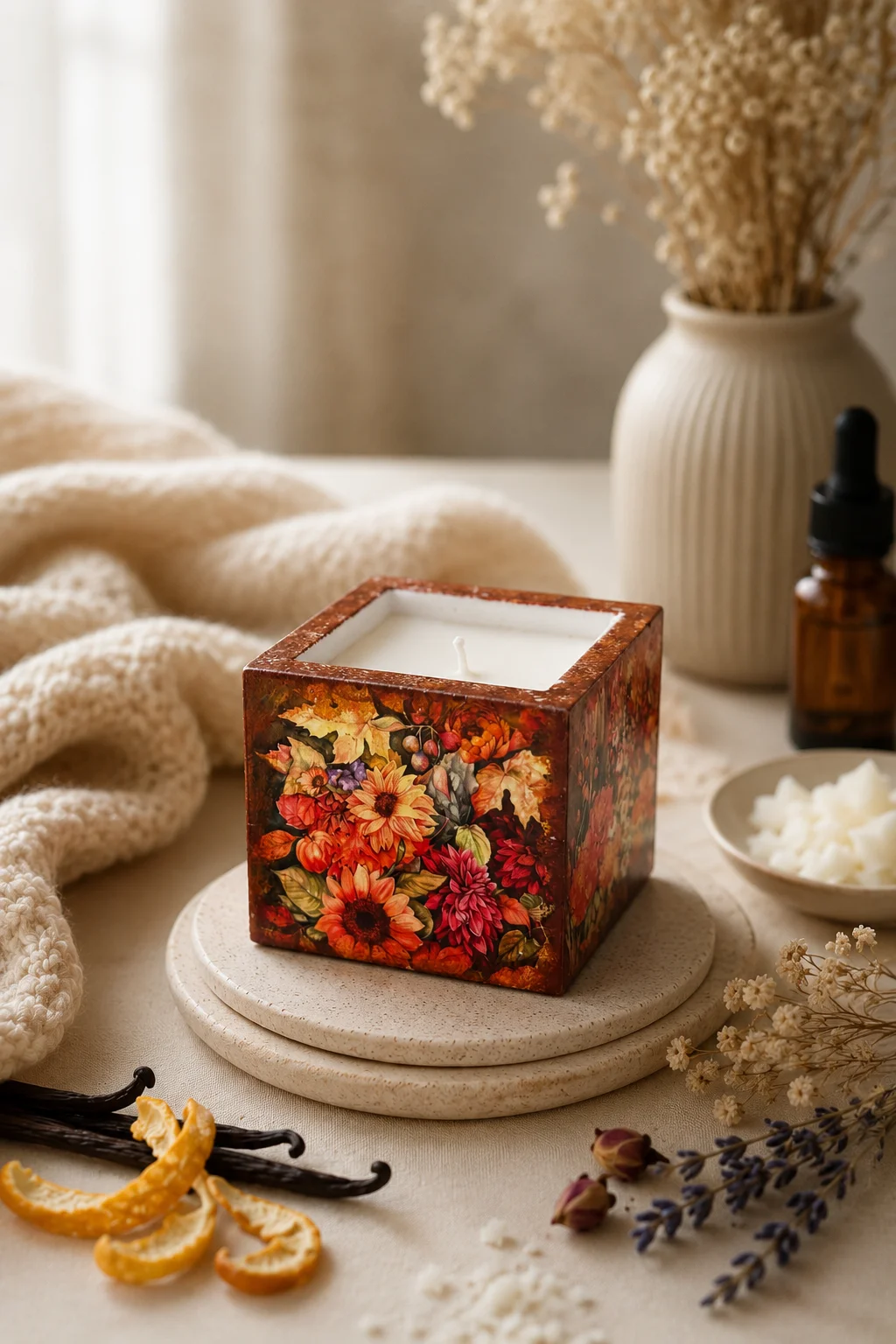
What Affects Candle Scent Throw?
Scent throw depends on much more than the fragrance percentage. Even with the correct fragrance load, the aroma can still feel weak if the candle has not cured long enough, the wick is wrong, the technique is off, or testing happens in the wrong conditions.
Personal perception matters too. The same fragrance can feel bright to one person and soft to another. Dry air, allergies, a cold, or poor air circulation also change how well we perceive scent.
Individual Scent Perception
Fragrance is subjective. Different people perceive intensity, brightness, and individual notes differently.
Room conditions matter as well. The drier the air, the weaker a scent can feel. During a cold, an allergy flare-up, or nasal congestion, your receptors may be partially blocked and even a well-made candle will seem less fragrant.
Candle Curing Time
Some candles need time for the fragrance to develop. Try curing your candle for 14–20 days before final testing.
During this time, the wax and fragrance oil bind together more completely. The aroma can become deeper, more even, and more noticeable while burning.
Candle Size vs. Room Size
A candle can only scent a space that matches its size.
If the candle is too small for the room, the aroma may feel weak even with a correct formula. For example, a 200 ml candle may be enough for a room around 20 m² / 215 ft², depending on ventilation, wax type, fragrance, and wick performance.
Larger rooms may need a bigger candle, several candles burning at once, or a stronger fragrance formula.
Choosing the Right Wick Size
The wick must match the candle's diameter and the wax formula.
If the wick is too small, the candle can struggle to light, produce a weak melt pool, and release less fragrance.
If the wick is too large, the candle can burn too hot, overheat the container, and consume wax too quickly.
A properly sized wick provides an even burn and helps fragrance molecules distribute evenly across the room.
Fragrance Mixing Technique
Make sure fragrance oil is added at the temperature recommended for your wax and is fully blended into the wax before pouring.
If the fragrance is unevenly distributed, the scent will be inconsistent too — stronger in one part of the candle and weaker in another.
Stir slowly but thoroughly so the fragrance fully bonds with the wax, without whipping extra air into the mixture.
Testing Without Drafts
Test your candle in a draft-free room.
Open windows, air conditioning, fans, ventilation, and open doors can carry fragrance molecules away from the testing area. As a result, the aroma can feel weak or uneven.
Before testing, close doors and windows and let the candle burn in stable conditions.
Fragrance Oil Behavior
Every fragrance oil behaves differently.
Some scents are bright and fill a room quickly. Others are softer, more delicate, or open up more slowly. Each fragrance has its own viscosity, evaporation rate, and aromatic profile.
When a fragrance interacts with a specific wax base, its behavior can shift. Testing is essential. Sometimes you need to adjust the fragrance percentage, wick, wax type, candle size, or curing time.
Useful Muse Molds Resources
If you are just starting to test candles, begin with our free candle making course.
Use the candle wax calculator to measure wax more accurately before testing.
If you make molded candles or wax melts, explore our silicone candle molds and silicone wax melt molds.
FAQ
Why does my candle smell strong cold but weak while burning?
Cold throw and hot throw are different. A candle can smell great before lighting but feel weaker while burning if the wick, wax, fragrance load, or curing time are not properly matched.
How long should a candle cure for the best scent throw?
Many candles benefit from curing 14–20 days before final testing. Some waxes and fragrance oils need even longer for the scent to fully develop.
Can the wrong wick weaken the scent?
Yes. A wick that is too small may not create enough heat or a proper melt pool to effectively distribute the fragrance.
Does room size affect scent throw?
Yes. A small candle may not adequately scent a large room. Candle size, room area, air circulation, and ventilation all affect how strong the aroma feels.
Can allergies or dry air affect how I perceive scent?
Yes. Dry air, allergies, a cold, or nasal congestion can reduce scent perception even when the candle itself is made correctly.